Author: admin@wbb

  • Reviews on “Hello Bachhon (2026)”

    Reviews on “Hello Bachhon (2026)”

    I recently watched a web series called Hello Bacchon on Netflix, which is inspired by the real-life story of Alakh Pandey. He is the founder of Physics Wallah, a platform that has been performing exceptionally well over the past few years.

    After watching the series, I became curious and explored the platform myself. I noticed that their main goal is to genuinely help students perform well. Their courses are very affordable, and their focus is on providing quality education so that every student can prepare effectively for competitive exams like JEE Main and JEE Advanced.

    I have also observed many other coaching institutes, and in most cases, their primary focus seems to be marketing and making money. However, Physics Wallah appears different. They truly aim to provide good education rather than just focusing on profits.
    My daughter has recently completed her Class 10 exams and has chosen the PCM stream for Class 11. She is also planning to prepare for IIT and other competitive exams like JEE Main and Advanced. Therefore, I will definitely choose a course from Physics Wallah instead of going to other platforms, because many others seem more focused on marketing than on actual teaching.

    Moreover, according to the rules of the Central Board of Secondary Education, dummy admissions are no longer allowed. Students must attend school regularly in Classes 11 and 12. I believe this is the right approach, because school life is very important. At home, students may not receive the same level of structured education and discipline.

    It is not enough to only clear JEE Main or Advanced; good performance in board exams is equally important. With regular school attendance, students may not have enough time to attend offline coaching institutes.

    That is why I believe online platforms are a better option. Students can study from home, and those who are dedicated and hardworking can succeed from anywhere. In my opinion, Physics Wallah’s online platform is a great choice.

    They offer a wide range of packages, from very basic to more advanced ones. Even their most affordable packages include comprehensive learning resources. I believe choosing such a platform is much better, especially when it focuses on students’ needs rather than just making money.
  • Environment Disturbances

    Environment Disturbances

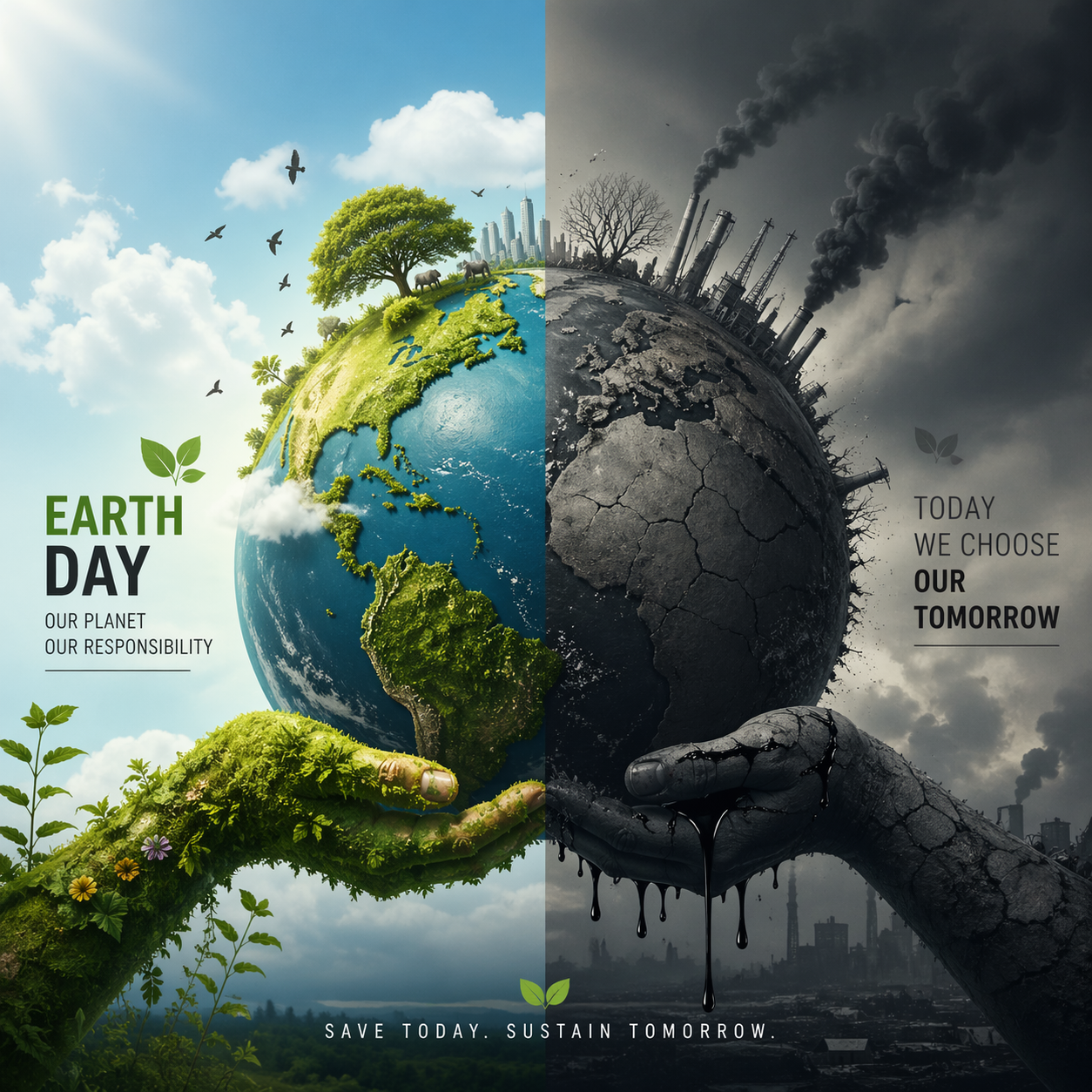
    Environmental disturbances are changes or disruptions in the natural environment that affect ecosystems, biodiversity, and human life. These disturbances can be natural or human-made.


    🌍 Types of Environmental Disturbances

    1. Natural Disturbances

    These occur without human involvement:

    • Earthquakes
    • Floods
    • Wildfires
    • Volcanic eruptions
    • Wildfires
    Progress
    Designing

    2. Human-Made Disturbances

    These are caused by human activities:

    • Deforestation
    • Pollution (air, water, soil)

    • Urbanization Mining and industrial activities Climate change due to greenhouse gases
    • Mining and industrial activities
    • Climate change due to greenhouse gases

    These disturbances often cause long-term damage to the environment.

    Effects of Environmental Disturbances
    • Loss of biodiversity
    • Climate imbalance
    • Soil erosion
    • Water scarcity
    • Health problems in humans

    How to Reduce Environmental Disturbances

    • Plant more trees (afforestation)
    • Reduce pollution and waste
    • Use renewable energy (solar, wind)
    • Spread awareness
    • Follow sustainable practices

    Conclusion

    Environmental disturbances can seriously affect life on Earth. While natural disturbances are unavoidable, human-made disturbances can be controlled through responsible actions and sustainable living.

  • who is winner Iran or America

    who is winner Iran or America

    ⚖️ **Iran vs United States: Who is Winning?**
    Many people are asking — who is the real winner between Iran and the United States?
    The truth is simple: **there is no clear winner yet.**

    The situation remains tense, with ongoing conflicts and failed peace talks. Both sides are claiming victory, but the reality is more complicated.

    The United States reports significant military success, while Iran continues to show resistance and strength. Experts believe that both nations are facing serious losses — not just militarily, but economically and globally as well.

    👉 **Conclusion:**
    There is no definite winner. The conflict is still ongoing, and for now, it can be seen as a **draw**.

    Stay informed. Stay aware. 🌍

  • CBSE Class 10 Result 2026

    CBSE Class 10 Result 2026

    The expected date for the CBSE Class 10 Board Result 2026 is currently anticipated to be around April 14 or 15, 2026.
    While the board has not officially confirmed the exact hour, multiple reports suggest a significant shift this year, moving the declaration from the traditional “mid-May” window to a “mid-April” timeline.


    Key Expected Timelines

    Why are results earlier this year?


    The early release is primarily due to the new two-exam system introduced under the National Education Policy (NEP) 2020.
    • Faster Evaluation: Evaluation was fast-tracked because the first board exam concluded on March 11.
    • Buffer for Second Attempt: The results are being announced now to give students enough time to decide if they want to appear for the optional second board exam in May to improve their scores.

    Where and How to Check

    Once the link is live, you can check the scores on these official portals:
    • cbse.gov.in
    • results.cbse.nic.in
    • DigiLocker
    • UMANG App

    Note:

    Make sure you have your Roll Number, School Number, and Admit Card ID ready, as these are mandatory for logging in.

    Since you’ve been coordinating schedules and helping with prep, this earlier-than-expected date might change the rhythm of the upcoming weeks! Keep an eye on the official CBSE handle for the final “Result is Out” notification, which usually drops just a few hours before the link goes live.

  • English should be a skill not a language in India

    English should be a skill not a language in India

    In India, English has long been treated as a language of prestige, education, and opportunity. However, in today’s rapidly evolving world, it is more useful to see English not as a language to be mastered for its own sake, but as a practical skill that enables communication, growth, and access to global platforms.


    India is a linguistically diverse country with hundreds of languages and dialects. For most people, English is not a native language but a second or even third language. Yet, it plays a crucial role in higher education, corporate jobs, technology, and international communication. Because of this, English often becomes a barrier rather than a bridge—those who speak it fluently are seen as more capable, while others may feel left behind. This mindset needs to change.


    If English is treated as a skill rather than a language, the focus shifts from perfection to usability. Just like learning to use a computer or drive a car, English should be seen as a tool that helps individuals perform tasks effectively. The goal should not be flawless grammar or accent, but clear communication. When students and professionals understand this, they become more confident in using English without the fear of making mistakes.


    In many Indian classrooms, English is still taught in a theoretical manner—focusing heavily on grammar rules, textbook exercises, and rote learning. This approach often fails to prepare students for real-life situations like interviews, presentations, or conversations. Instead, English education should emphasize practical usage: speaking, listening, reading for understanding, and writing for communication. Activities like group discussions, role-plays, and storytelling can make learning more interactive and effective.


    Moreover, considering English as a skill promotes inclusivity. It reduces the social divide between those who are fluent and those who are not. People from rural or non-English-medium backgrounds often hesitate to speak because they fear judgment. When English is viewed as a skill everyone is still developing, it creates a more supportive environment where learning becomes continuous and non-judgmental.


    In the professional world, employers are increasingly looking for communication skills rather than just language proficiency. They value clarity of thought, the ability to express ideas, and confidence. Even basic English, if used effectively, can open doors to opportunities in fields like customer service, IT, education, and business. Therefore, developing English as a skill directly contributes to employ-ability.


    At the same time, it is important to respect and preserve India’s rich linguistic heritage. Promoting English as a skill does not mean diminishing the value of regional languages. In fact, multilingualism is one of India’s greatest strengths. Individuals should be encouraged to be proud of their mother tongue while also learning English as a practical tool for wider communication.


    In conclusion, redefining English as a skill rather than a language in India can transform the way it is learned and used. It can reduce fear, increase confidence, and make communication more accessible to all. By focusing on practical usage instead of perfection, India can empower its people to connect, grow, and succeed in a globalized world.